



News
Factors affect rubber seals
- 2016-07-12 17:38:44
-
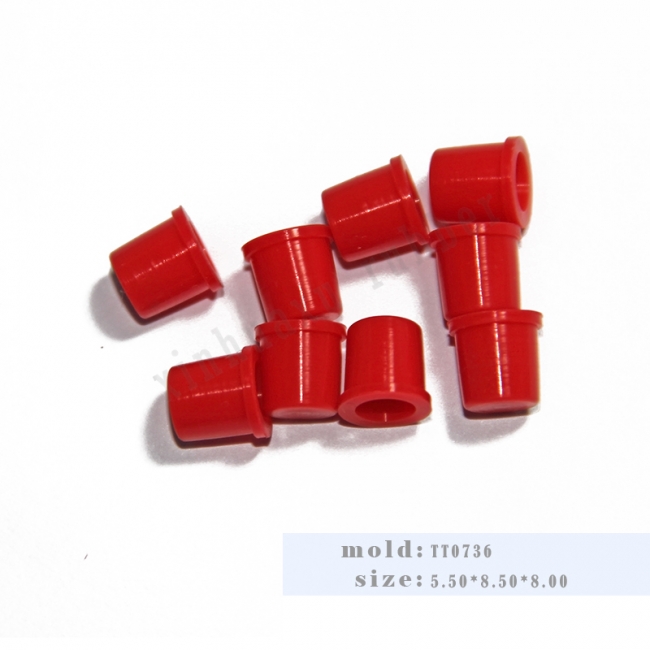 Factors affect rubber sealsVulcanized rubber seals is through chemical cross-linking between rubber molecules will be substantially converted to plastic raw rubber elastic and dimensionally stable product, the physical properties of vulcanized rubber stable, extended temperature range. "Vulcanization (Curing)" the term commonly used throughout the rubber industry, plays an important role in rubber chemistry. Vulcanized rubber molecular chains (crosslinking) reaction capacity depends on its structure. Unsaturated diene rubber (e.g. natural rubber, styrene-butadiene rubber and nitrile rubber and the like) a molecular chain containing an unsaturated double bond, with sulfur, a phenol resin, an organic peroxide or the like is formed by an addition reaction or substitution molecules between crosslinking. Usually unsaturated rubber crosslinked with a radical having a certain energy (such as organic peroxides) and high-energy radiation. Special rubber containing functional groups (such as chlorosulfonated polyethylene, etc.), the crosslinking, such as rubber sulfonamido by metal oxides, amines by reaction with a specific cross-reactive substances with established various functional groups formed Union.Tensile strength of the rubber seal of such materials are characterized ultimate tensile load against data corruption. Factors that influence industrial rubber tensile strength more. The first point from the recipe planning thinking, mainly raw rubber species, variety and amount of vulcanizing system and fillers. High tensile strength formulation should be made from natural rubber, neoprene rubber and other crystalline or chlorosulfonated polyethylene, gum content is usually around 60%. It should be a good choice of active filler, and kneading it when you want to slack uniform. When using active filler to make up for an amount to be fit. Secondly, the tensile strength of rubber sheets and rubber layout related to the amount of points is small, intermolecular interactions on smaller sub-price health. Therefore, when an external force greater than the intermolecular interaction occurs slide leaving data damage molecules. Conversely molecular weight, intermolecular forces increase, the compound cohesion progress, easy to slide segment stretching, then the extent of the damage data is small. Where other factors influence the intermolecular forces are tensile strength influential. If there is NR / CR / CSM rubber backbone of these crystalline alternative group, valence forces between molecules greatly improved tensile strength followed progress. That is one of the main reason for the good performance of these self-reinforced rubber. Usually rubber followed by the degree of crystallinity progress, tensile strength increases. Finally, the tensile strength is also related to the temperature of the root, the tensile strength at high temperature far below room temperature tensileWhen the rubber seals molding, pressing after much pressure, it is ready because the cohesion of the elastomer can not be eliminated in the molding from the mold, often have highly unstable contraction (shrinkage of rubber, due to different types of plastic and there are differences) , after a period of time necessary to stabilize gentle. So, when a rubber products designed from the beginning, regardless of the recipe or mold, are calculated with the need to be cautious, if not, it is easy to produce products dimensionally unstable, resulting in low-quality products.The case of hot melt rubber thermosetting elastomers, plastics belong hot melt cold curable. Rubber due to different types of sulfide body, its molding curing temperature range, there is a considerable gap, or even the effects of climate change, indoor temperature and humidity. Thus manufactures rubber production conditions, to be ready to make appropriate adjustments, if not, you may have differences in the quality of products. Tensile strength. After the root tensile strength crosslink density, followed by cross-linking density is added, add tensile strength, continue to add exhibits maximum crosslink density, tensile strength will be significantly reduced.Silicone hydraulic seal according to the size of the aperture is divided into: large pore silica gel, rough hole silica gel, B-type silica gel, pore silica gel. Due to the different pore structure, adsorption properties so they have their own characteristics. Coarse pore silica at high relative humidity conditions have a higher adsorption capacity, pore silica gel in the case of low relative humidity higher than the coarse pore silica adsorption capacity, while the B-type silica gel due to the pore structure between the coarse pore among silica gel, the adsorption amount between the crude, between pores. Wide pore silica is generally used as a catalyst carrier, matting agents, toothpaste abrasive. Therefore, you should choose different varieties for different purposes.
- Previous [Return Home] [Print] [Go Back] Next
Contact Us
Tel:
18028761392Fax:
0086 755-84518329E-mail:sales@singwax.com
E-mail:sales@singwax.com
E-mail:sales@singwax.com


